
How to use eggshells in your worm composter
Worm composting is all about balance (moisture, aeration, carbon/nitrogen ratio, acidity). To maintain the right pH level (acidity indicator) inside your worm composter, it is essential to regularly add eggshell powder.But why is this so important? How does it work? And most importantly, how should you add eggshell powder to your worm composter?
We reveal everything in this article to help you properly balance your worm composter with eggshell powder!

What is the purpose of eggshells in a worm composter?
Let’s go back to the basics of worm composting.
To use your worm composter effectively, you need to manage the physicochemical balances of the ecosystem. One of the most important factors is acidity.
Even if you don’t add lemons, vinegar, or other acidic substances, the decomposition of organic matter naturally acidifies the bedding.
In a worm composter, a process called humification occurs. This complex physico-chemical-biological mechanism results in the production of humins, humic acids, and fulvic acids. Humic and fulvic acids are weak acids produced by the biodegradation of organic matter. These elements form the stable and bioavailable components of humus.

A worm composter is a closed, non-leaching ecosystem (unlike soil exposed to rain), so these acids accumulate and lower the pH of the environment. This causes an imbalance that needs to be regulated; otherwise, various organisms will struggle to survive, and the smell won’t be pleasant for you either.
How do eggshells help balance the pH?
Eggshells are composed of calcium carbonate (CaCO3), similar to seashells, limestone, and marble. They have the advantage of being easily ground into powder.
Calcium carbonate is an ideal chemical compound for neutralizing the acidic (H3O+) byproducts of plant decomposition. It acts as a base when it comes into contact with the acids in the compost, restoring pH balance. Don’t expect dramatic chemical reactions—this is about weak acids and bases.
However, if you want to see a reaction, try putting crushed eggshells in vinegar!

Grinding eggshells into fine powder
For calcium carbonate to act chemically, it must be pulverized into a very fine powder. If left in chunks, it won’t react with the weak acids present.
You need to grind eggshells as finely as possible because simple shell fragments are ineffective in this delicate chemical process.
In fact, eggshell fragments are often still visible when harvesting the worm compost.

Additionally, worms need tiny hard particles, which they ingest and store in their gizzard. Since they have no teeth, these particles help them grind and digest the material they consume.
A worm composter, therefore, requires fine eggshell powder to function properly. Now, let’s explore different methods to finely crush eggshells.
By hand: Too rough and painful
Crushed by hand, eggshells remain in large pieces and don’t turn into powder, making them useless in the worm composter.
Plus, it’s not comfortable for your hands!
With a mortar and pestle: Moderate efficiency and effort
Using a mortar and pestle, you can crush eggshells in just a few minutes.
This method works well for small amounts, and with some effort, you can achieve a fine powder beneficial for worms and pH balance. However, it becomes tedious for larger quantities.
With a blender: Effective but tough on the blades
A blender can quickly grind large amounts of eggshells, but the hard shells may damage the blade over time.
With a coffee grinder: The ultimate tool
This is my preferred method!
Whether manual or electric, a coffee grinder ensures a fine grind. Personally, I invested about $10 in a coffee grinder dedicated to grinding eggshells. It’s quick, effective for large amounts, and produces very fine powder.

The best method depends on how you store your eggshells. If you grind them as you go, a simple mortar and pestle or manual coffee grinder will do. If, like me, you accumulate a large number before processing, household appliances will be your best allies. Also, dried eggshells break more easily, making grinding simpler.
How to use eggshell powder?
How much eggshell powder should you add to your worm composter?
Read carefully—the procedure is quite precise.
Sprinkle some eggshell powder from time to time in the top bin, where you deposit fresh waste.
As mentioned earlier, this is delicate chemistry. The amount of calcium carbonate needed to balance humic acid production is relatively small. If you consume eggs occasionally, you’ll have enough.
There’s no need to weigh the quantity—overdosing isn’t a risk. Since calcium carbonate is a weak base, it won’t raise the pH above its normal level.
How often should you add eggshell powder to your worm composter?
It’s unnecessary to add eggshell powder with every food scrap. There should already be some in each bin. Just sprinkle some occasionally, and it will be fine!
Calcium carbonate remains in the bedding and compost, where it can neutralize excess acids. Personally, I add about one tablespoon every two weeks in the feeding bin. Whether you eat two eggs per week or a dozen, you can use all the shells!
What if I don’t have eggshells?
Use another calcium carbonate-based material
Seashells, chalk, and other calcium carbonate sources can work if finely ground. However, crushing oyster shells is quite the challenge! Eggshells are much more brittle and commonly available.
Find eggshells from neighbors
Ask your neighbors or a local bakery—they might be happy to save some eggshells for you!
Use commercial lime-based products
Specialty worm composting stores offer lime-based products that help regulate pH, such as "Vita Vers PLUS" or "Regulaworm".
These are effective and provide additional nutrients to the ecosystem, but they aren’t free.
Leftover eggshells in worm compost—Is this normal?
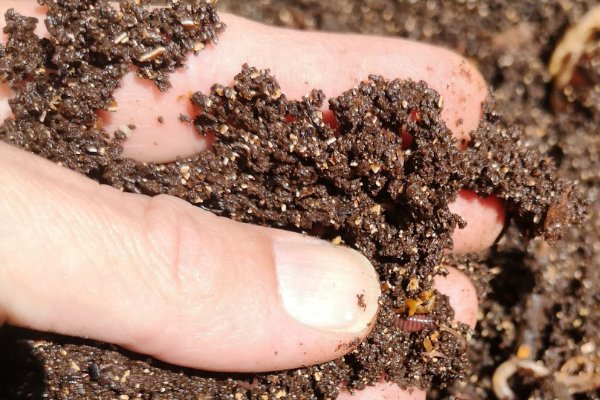
Yes! Not all of it will react, as the composting environment isn’t highly acidic. Larger fragments may remain visible, but that’s fine—they will benefit the soil over time when you use the worm compost.
Does it harm the worms?
Worms won’t get impaled on sharp eggshells—they simply slide past them (they aren’t reckless!). They also ingest the finest particles, using them in their gizzard to help grind and digest food.
Worms love finely ground eggshell powder!
And that’s everything you need to know about using eggshells in your worm composter!
Special thanks to Clémentine, Fabienne, Julie, and Vincent for their diligent proofreading and insightful feedback while writing this article.
If you’d like to join our team, check out this page.
I truly enjoyed writing this article—it reminded me of my university studies (which makes me feel old!).
Feel free to share your tips and advice in the comments!

David Régnier Garnelo
Founder of the website, coordinator of the association
I am the creator and facilitator of Plus 2 Vers!
I have been practicing vermicomposting for many years and have made (almost) every mistake in the beginning. But I persevered, did my research, and started giving advice to those around me.
I launched Plus 2 Vers at the end of 2012 with the association Les Boîtes Vertes to make vermicomposting accessible through sharing and the resources available on the website.


Subscribe!
Don't miss the good tips and discover all that Plus 2 Vers has to offer!
0 Comments